Açaí certifications buyers should require: EU Organic, USDA, Canada, HACCP, Halal and FDA registration
Short answer
Each credential answers a different question. Organic certifications (Brazil, EU, USDA and Canada) confirm the product was produced and handled under that market's organic rules; HACCP confirms process hazards are identified and controlled; Halal confirms Halal production requirements are met. FDA registration is not a certification: it is the mandatory listing of the facility to export food to the US and does not mean FDA approval of the product.
If you buy açaí pulp to sell as organic outside Brazil, you need organic certification for the destination market, not just the Brazilian one. Each credential answers a different question from your auditor: organic tells you how the fruit was produced and handled, HACCP tells you how process hazards are controlled, and Halal tells you whether product and process meet Halal requirements. FDA registration is none of these: it is a mandatory listing of the facility.
This guide goes credential by credential: what each one guarantees, which standard it rests on and what to ask your supplier so you can approve certified organic acai pulp without surprises at customs.
What does each açaí certification guarantee the buyer?
The table summarizes what each credential covers. It does not replace reading the certificate itself: what counts is the scope written on it (products, sites and activities covered).
| Certification | Market | What it guarantees you | Legal basis |
|---|---|---|---|
| Brazil Organic | Brazil | Product from an organic production system, assessed by a body accredited by the Brazilian Ministry of Agriculture (MAPA); single national seal | Lei 10.831/2003 and Decreto 6.323/2007 (Brazilian organic law and its implementing decree) [1] [2] |
| EU Organic | European Union | Production and labelling under the EU organic rules; the basis for the e-COI that clears the lot at the EU port | Regulation (EU) 2018/848 [3] |
| USDA Organic | United States | Operation certified under the National Organic Program, with auditable records from purchase to sale | 7 CFR Part 205 [4] |
| Canada Organic | Canada | Product certified to the Canadian Organic Standards, required for an organic claim on imported products | Safe Food for Canadians Regulations, Part 13 [5] |
| HACCP | All markets | Physical, chemical and biological hazards identified and controlled at every step, with records | Codex CXC 1-1969 [6] |
| Halal | Halal markets | Product and process meet Halal requirements, after document review, audit and committee decision | Certifier’s requirements (FAMBRAS Halal) [7] |
| FDA registration | United States | Only that the facility is registered with the FDA. It does not attest quality or approve the product | 21 CFR Part 1, Subpart H [8] |
Why is Brazilian organic certification not enough for export?
In Brazil, an organic product must be certified by an officially recognized body [1]. The Brazilian system has two routes, third-party audit certification and participatory guarantee systems, and is identified by a single national seal [2]. (Lei 10.831/2003 is Brazil’s Organic Agriculture Law; Decreto 6.323/2007 is the decree that implements it.)
That seal does not carry over abroad. The European Union applies Regulation (EU) 2018/848, in force since 1 January 2022 [9]. Brazil is not on the EU’s list of countries with recognized equivalence. For countries outside that list, inspection and certification are carried out by control bodies recognized and supervised by the European Commission. And every imported organic lot needs an electronic certificate of inspection (e-COI) issued in the TRACES system; without it, the product is not released at the port of arrival [10].
Canada follows the same logic: Brazil is not among the countries with a Canadian organic equivalency arrangement [11]. In that case, the importer attaches to the import declaration the organic certificate issued to the last operation that handled the product before export. That certificate must state the standard and be valid on the date of import [12].
In the United States, every operation that sells or labels a product as “organic” must be certified under the National Organic Program [4]. Before each shipment, the exporter requests an NOP Import Certificate from an accredited certifier, generated in the Organic Integrity Database. The importer then reports that data to US Customs [13].
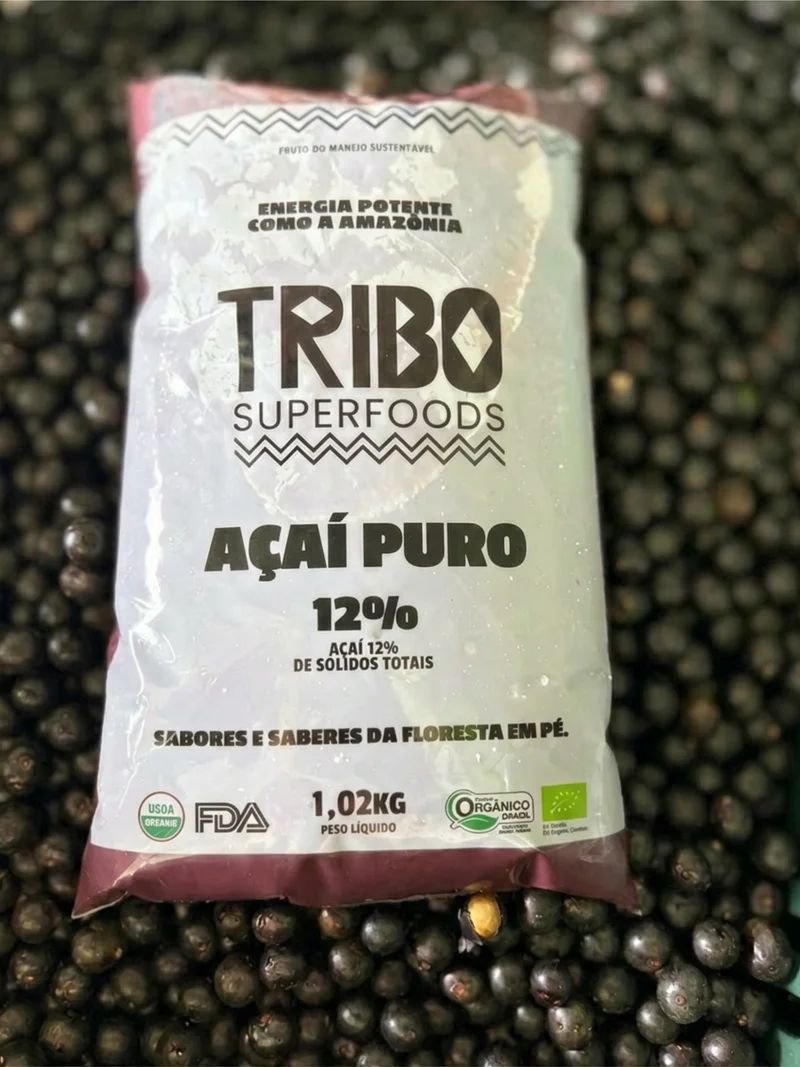
In practice: Tribo holds all four organic certifications: Brazil Organic, EU Organic, USDA Organic and Canada Organic. You buy a single product and route each lot to whichever market you need. The certifier is QIMA IBD, which also issues the e-COI for the European Union.
What does açaí HACCP guarantee the buyer?
HACCP (Hazard Analysis and Critical Control Points) is a systematic approach to identifying, evaluating and controlling food safety hazards. It rests on seven principles: hazard analysis, critical control points, critical limits, monitoring, corrective actions, verification and record-keeping [14]. The international reference is the Codex Alimentarius, whose text CXC 1-1969 brings together good hygiene practices and the guidelines for applying HACCP [6].
For a buyer, the value is in the records: if a lot raises a question, there is documentation showing what was monitored and what was corrected. At Tribo, the HACCP protocol is implemented and governs the entire production process.
What does Halal certification guarantee?
Halal serves customers and markets that require it, such as the Middle East and Southeast Asia. At FAMBRAS Halal, certification has several stages: document review of the product and raw materials, a two-stage audit, laboratory testing where there is risk, and a decision by a committee of religious and technical experts who did not take part in the audit [7]. Tribo holds Halal certification from FAMBRAS Halal.
Is FDA registration a certification?
No. Food Facility Registration is the listing that every facility that manufactures, processes, packs or holds food for consumption in the United States must file with the FDA [15]. Registration must be completed before the facility begins those activities and renewed every two years, between 1 October and 31 December of each even-numbered year [16]. Foreign facilities also designate a US agent, who acts as the communication link between the FDA and the plant [17].
The regulation is explicit. A registration number only means the facility is registered; it does not convey FDA approval or endorsement of the facility or its products [8].
What registration guarantees: that the plant may export food to the US and that the FDA knows who and where it is.
What registration does not guarantee: quality, microbiological safety, product authenticity, organic status or compliance with any of your specifications. That is what certifications, the HACCP plan and the per-lot COA are for.
Be wary of suppliers who show an “FDA certificate” or claim an “FDA-approved” product. Tribo is an FDA-registered facility (Food Facility Registration) and says exactly that: registration, not certification. If you are looking for an FDA registered açaí supplier, ask for the registration number and US agent, and judge quality on the other documents.
What should you request from an açaí supplier during approval?
Use this checklist in your supplier document audit:
- Valid certificates, with scope. For each certification, check the holder (legal name and Brazilian company tax ID, CNPJ), the product covered (frozen açaí pulp), the production site, the reference standard and the validity date. A certificate belonging to another company, covering another product or expired does not count.
- Destination organic import document. Agree in advance who issues the e-COI in TRACES (EU), the NOP Import Certificate (US) or provides the certificate copy for the Canadian declaration [10] [13] [12].
- COA per lot. Ask for the microbiological and physicochemical certificate of analysis for the lot you will actually receive, not a generic season report. At Tribo, the COA is issued per production lot by the Multi-Analysis Laboratory of the Federal University of Pará (UFPA).
- Technical data sheet per SKU. Total solids (8%, 12% or 14%), storage temperature (-18 °C), shelf life (24 months from production) and acceptance parameters. See the data sheets on the products page.
- HACCP plan summary. Steps, critical control points, critical limits and sample monitoring records [14].
- FDA registration. For US destinations, the facility registration number and the US agent [17].
- Traceability test. Pick a lot and ask the supplier to show, document by document, where the fruit came from and where the product went (see the next section).
- Sample with lot COA. Evaluate it in your own process before the first order.
How does lot traceability connect to the certifications?
Organic certifications depend on traceability. Under the US program, a certified operation must keep records that follow the product from purchase to sale, trace back to the last certified operation and are retained for at least five years [18]. The EU e-COI and the Canadian certificate also tie each shipment to an identified certified operation [10] [12].
For you, this means the lot number is the key that links everything:
| Link | What the lot number connects |
|---|---|
| Origin | Farmer and fruit harvest area |
| Process | HACCP records for that production day |
| Quality | COA issued for that production lot |
| Certification | Organic import document for the shipment |
| Delivery | Invoice, export documents and transport temperature |
At Tribo, the fruit comes from the CAEPIM cooperative (Igarapé-Miri, Cametá and Abaetetuba, in the Lower Tocantins region of Pará), and every lot is traceable back to the farmer. If there is a complaint or an audit by your own customer, you can answer with documents, not assumptions. The chain of custody is also certified by QIMA IBD.
The next step is to review the certificates and the data sheet for the SKU you use. See the full list in the certifications for industrial buyers section or contact our sales team: they reply within 24 hours with documentation, a sample and the lot COA.
Frequently asked questions
Can açaí with Brazilian organic certification be sold as organic in Europe or the US?
Not automatically. Each market requires certification under its own standard: Regulation (EU) 2018/848 in the European Union, 7 CFR Part 205 in the United States and the Canadian Organic Standards in Canada. Brazil is not on the EU or Canadian lists of countries with organic equivalence, so the supplier must hold each certification separately.
Does FDA registration mean the açaí is approved by the FDA?
No. Food Facility Registration is the mandatory listing of any facility that manufactures, processes, packs or holds food for consumption in the US. The regulation itself states that a registration number does not convey FDA approval or endorsement of the facility or its products.
Which documents travel with each organic açaí shipment?
Besides the commercial documents, an organic shipment needs the certification document the destination requires: the electronic certificate of inspection (e-COI) in TRACES for the EU, the NOP Import Certificate data for the US and a copy of the organic certificate attached to the Canadian import declaration. At Tribo, every lot ships with a COA issued per production lot.
Is HACCP a product certification?
HACCP is a process control system built on seven principles: hazard analysis, critical control points, critical limits, monitoring, corrective actions, verification and record-keeping. For a buyer, the value lies in the auditable records of each step, which you can request during supplier approval.
Does açaí need Halal certification?
Only if your customer or destination market requires it. Halal is typically requested by customers in the Middle East and Southeast Asia and by manufacturers selling to Muslim consumers. Tribo holds Halal certification from FAMBRAS Halal.
References
- Lei nº 10.831, de 23 de dezembro de 2003 — Dispõe sobre a agricultura orgânica e dá outras providências (Brazilian Organic Agriculture Law). Presidência da República (Office of the President of Brazil). 2003. Available at:planalto.gov.br. AccessedOctober 29, 2026.
- Decreto nº 6.323, de 27 de dezembro de 2007 — Regulamenta a Lei nº 10.831/2003 (decree implementing the Brazilian Organic Agriculture Law). Presidência da República (Office of the President of Brazil). 2007. Available at:planalto.gov.br. AccessedOctober 29, 2026.
- Regulation (EU) 2018/848 of the European Parliament and of the Council of 30 May 2018 on organic production and labelling of organic products. Official Journal of the European Union (EUR-Lex). 2018. Available at:eur-lex.europa.eu. AccessedOctober 29, 2026.
- 7 CFR § 205.100 — What has to be certified (National Organic Program). Code of Federal Regulations (Legal Information Institute, Cornell Law School). Available at:law.cornell.edu. AccessedOctober 29, 2026.
- Organic products — Canada Organic Regime. Canadian Food Inspection Agency (CFIA). Available at:inspection.canada.ca. AccessedOctober 29, 2026.
- FAO; WHO. General Principles of Food Hygiene — CXC 1-1969. Codex Alimentarius Commission (FAO/WHO). 2023. DOI: 10.4060/cc6125en.
- Como certificar (How to get certified). FAMBRAS Halal. Available at:fambrashalal.com.br. AccessedOctober 29, 2026.
- 21 CFR § 1.242 — What does assignment of a registration number mean?. Code of Federal Regulations (Legal Information Institute, Cornell Law School). Available at:law.cornell.edu. AccessedOctober 29, 2026.
- Organic production and products — legislation. European Commission, Directorate-General for Agriculture and Rural Development. Available at:agriculture.ec.europa.eu. AccessedOctober 29, 2026.
- Trade in organic products. European Commission, Directorate-General for Agriculture and Rural Development. Available at:agriculture.ec.europa.eu. AccessedOctober 29, 2026.
- Organic equivalency arrangements. Canadian Food Inspection Agency (CFIA). Available at:inspection.canada.ca. AccessedOctober 29, 2026.
- Canada Organic Regime import requirements. Canadian Food Inspection Agency (CFIA). Available at:inspection.canada.ca. AccessedOctober 29, 2026.
- 7 CFR § 205.273 — Imports to the United States. Code of Federal Regulations (Legal Information Institute, Cornell Law School). Available at:law.cornell.edu. AccessedOctober 29, 2026.
- HACCP Principles & Application Guidelines. U.S. Food and Drug Administration (FDA). Available at:fda.gov. AccessedOctober 29, 2026.
- Registration of Food Facilities and Other Submissions. U.S. Food and Drug Administration (FDA). Available at:fda.gov. AccessedOctober 29, 2026.
- 21 CFR § 1.230 — When must you register or renew your registration?. Code of Federal Regulations (Legal Information Institute, Cornell Law School). Available at:law.cornell.edu. AccessedOctober 29, 2026.
- 21 CFR § 1.227 — What definitions apply to this subpart? (Registration of Food Facilities). Code of Federal Regulations (Legal Information Institute, Cornell Law School). Available at:law.cornell.edu. AccessedOctober 29, 2026.
- 7 CFR § 205.103 — Recordkeeping by certified operations. Code of Federal Regulations (Legal Information Institute, Cornell Law School). Available at:law.cornell.edu. AccessedOctober 29, 2026.