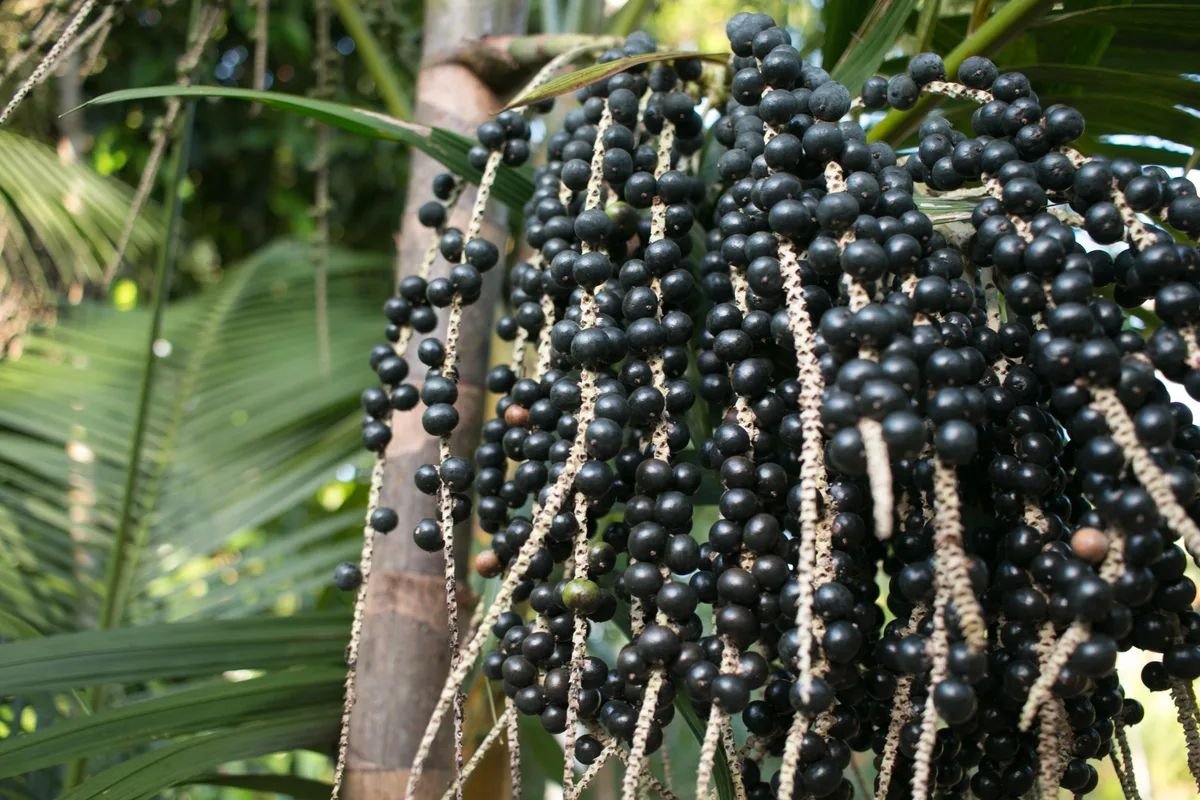
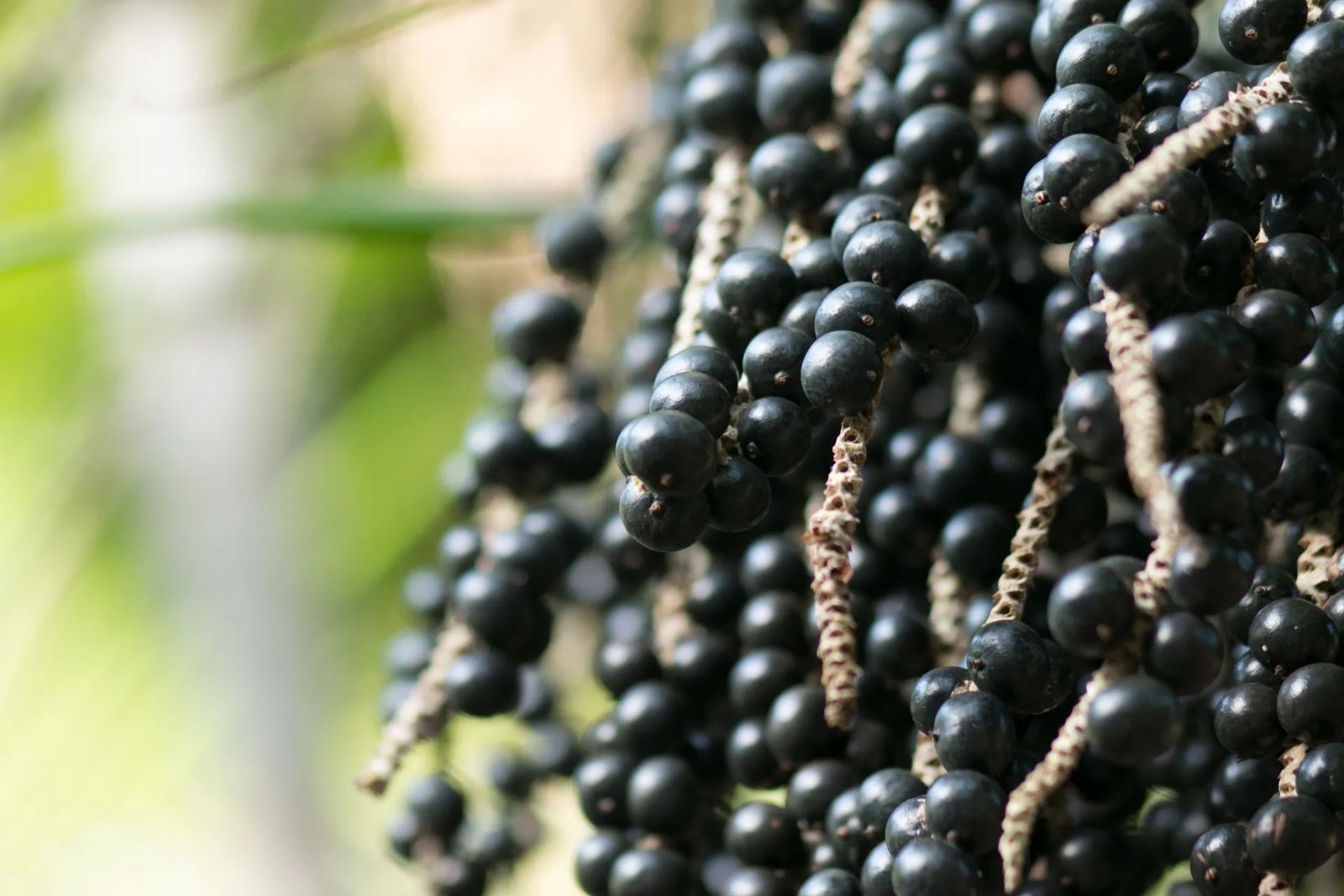
Açaí pulp grades explained: 8%, 12% or 14% total solids
Short answer
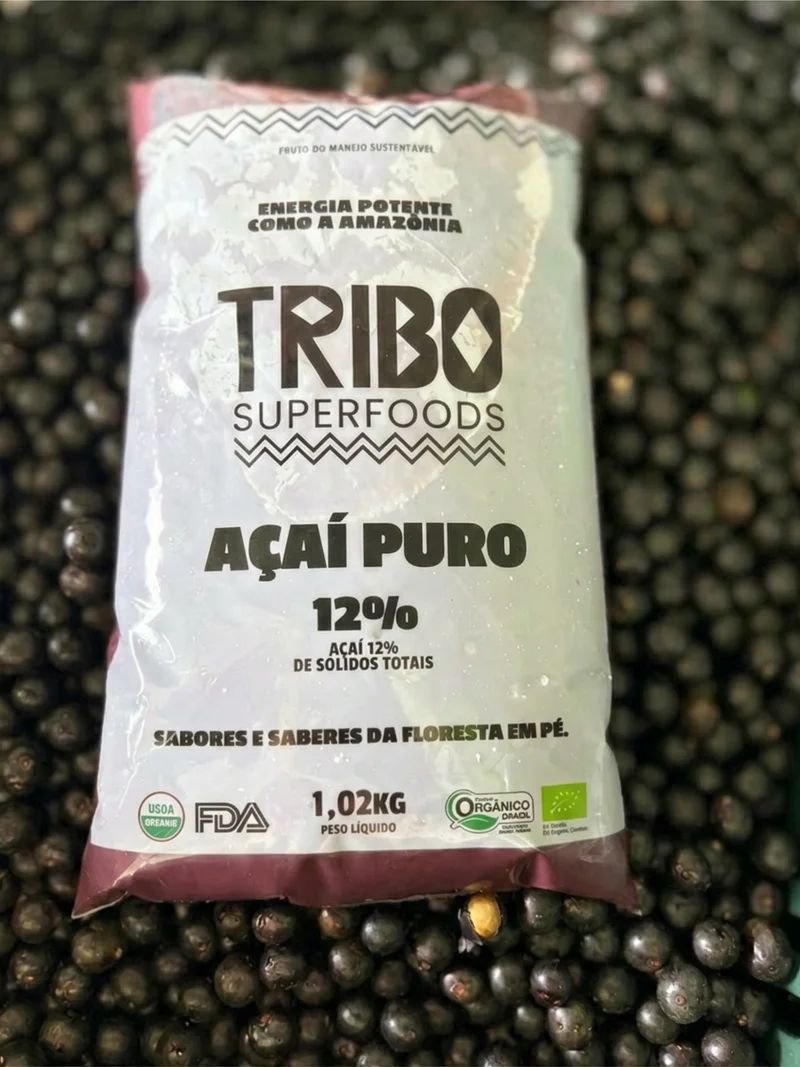
The percentage is the grams of açaí dry matter in every 100 g of pulp: 8%, 12% or 14%. Brazil's current standard (MAPA Normative Instruction 37/2018) sets a minimum of 8% and requires the product to be named by its total solids percentage. As a rule, 8% suits high-dilution formulations such as ice cream and beverages; 12% is the standard for açaí bowl shops, foodservice and processing; 14% serves premium formulations and signature menus.
If you buy açaí pulp as an ingredient, the percentage on the label is the specification that weighs most on your formulation cost: it tells you how much açaí actually goes into every kilo you receive, store at -18°C and ship. 8%, 12% and 14% açaí pulp are not different “qualities” of the same product. They are different concentrations, and each one fits a different type of application better. This guide explains what Brazilian regulation requires, which grade usually makes sense for ice cream, beverages, bowls or a premium line, and what to check on the certificate of analysis (COA) for each lot.
What are total solids, and why do they change your yield?
Total solids are everything left in the pulp once the water is removed: lipids, fiber, protein, natural sugars, minerals and phenolic compounds. The figure is expressed in grams per 100 g of product. In practice:
- 8% pulp: 80 g of açaí dry matter per kilo.
- 12% pulp: 120 g per kilo.
- 14% pulp: 140 g per kilo.
Commercial açaí pulp is obtained from the edible part of the fruit, extracted with added water and then filtered [1]. The more water goes into extraction, the lower the total solids content. That is why the grade is, above all, a measure of how much açaí and how much water you are paying for and shipping.
That dry matter is not neutral. A study comparing commercial purple açaí pulps sold as thick, medium and thin found lipid content ranging from 2.94 g/100 g in the thin pulp to 10.67 g/100 g in the thick one, with moisture between 82.74 and 92.00 g/100 g [2]. The lipid fraction of açaí is dominated by monounsaturated fatty acids, with oleic acid as the main one [3] [2]. The fruit is also rich in anthocyanins, mainly cyanidin-3-glucoside and cyanidin-3-rutinoside, which give it its purple-violet color [4]. In short: as the concentration goes up, body, color and flavor per kilo of pulp go up with it.
How does Brazilian regulation define açaí pulp grades?
Açaí pulp is regulated in Brazil by MAPA, the Ministry of Agriculture, Livestock and Food Supply, through Instruções Normativas (normative instructions: binding federal technical regulations). They matter to you as an importer because they define what a Brazilian supplier can legally sell as “açaí”, and therefore what a grade on a spec sheet or invoice actually means. There is a common source of confusion in the trade worth clearing up before you fix a specification.
The thin/medium/thick classification has been revoked. It came from Annex VI of MAPA Normative Instruction 1/2000, which defined [5]:
| Former name (IN 1/2000) | Total solids |
|---|---|
| Thin or popular açaí — fino (type C) | 8% to 11% |
| Medium or regular açaí — médio (type B) | above 11% up to 14% |
| Thick or special açaí — grosso (type A) | above 14% |
That regulation was revoked by Normative Instruction 49/2018, which set the identity and quality standards for fruit juice and fruit pulp [6]. The analytical parameters moved to Normative Instruction 37/2018.
What applies today (IN 37/2018, Annex II, item 6):
- The product is named “Açaí” followed by its total solids percentage, for example “Açaí 12%” [1].
- The minimum total solids content is 8% [1].
- On a dry-matter basis, the standard sets pH between 4.0 and 6.2; minimums of 7 g/100 g protein, 1.80 g/100 g total polyphenols and 0.44 g/100 g anthocyanins; and maximums of 3.2 g/100 g total acidity (as citric acid) and 6 g/100 g total natural sugars [1].
- Sensory requirements: the emulsion must remain stable even when heated to 80°C, with a purple-violet color and a flavor that is neither sweet nor sour [1].
Interestingly, the terms thin/popular, medium/regular and thick/special still appear in the same IN 37/2018, but for juçara pulp (from a related palm), not for açaí [1].
What this means for your purchase order: always specify the number (8%, 12% or 14%), not the name. “Thick” or “special” can mean different things to different suppliers. Note also that on the old scale, 12% and 14% would both fall in the “medium” band, and only pulp above 14% would be “thick” [5]. The percentage removes that ambiguity, and it is what the regulation requires today. These are Brazilian rules on how the product is produced and named at origin; labeling in your market follows your own country’s regulations.
Which grade should you use for ice cream, beverages, bowls or premium products?
The choice depends on how much açaí your formulation needs in the finished product and how much water or other ingredients you add in your process. The table summarizes how Tribo positions each SKU:
| Criterion | 8% pulp | 12% pulp | 14% pulp |
|---|---|---|---|
| Açaí dry matter per kg | 80 g | 120 g | 140 g |
| Name under IN 37/2018 | Açaí 8% | Açaí 12% | Açaí 14% |
| Tribo positioning | Volume grade | Flagship | Specialty grade |
| Typical applications | Ice cream and gelato, beverages and juices, industrial smoothies, high-volume bakery and confectionery | Açaí bowl shops, foodservice, standard processing, restaurant chains, standard export | Premium formulations, signature menus, premium açaí bowl shops, export, food R&D |
| Makes sense when… | your formulation dilutes the açaí heavily and the focus is cost per liter of finished product | you want a balance of yield and flavor intensity, at a standard consumers recognize | açaí is the hero ingredient and your menu or brand needs more body and color |
| Storage | -18°C | -18°C | -18°C |
Some practical criteria by application:
- Açaí pulp for ice cream and beverages: when açaí is one ingredient in a base with milk, sugar, stabilizers or juice, 8% pulp is usually enough, because the formulation itself already dilutes the açaí. If your base calls for little added water and a lot of açaí, compare it with 12% using the mass balance in the next section.
- Bowls and foodservice: açaí pulp with 12% total solids is the SKU most widely used by açaí bowl shops and foodservice. It delivers the body customers recognize in a bowl, without the cost per kg of the specialty grade.
- Premium formulations and signature menus: 14% pulp carries more lipids, color and flavor per kilo. It makes sense when your differentiation lies precisely in açaí intensity.
If in doubt, the safest route is to trial two grades at pilot scale with your actual formulation. Technical data sheets for each SKU are on our products and technical data sheets page.
How does the grade affect cost per liter and flavor?
Without talking about price, you can compare grades by the açaí dry matter each one delivers. It is a simple mass-balance calculation:
| To get the same amount of açaí solids as… | you need |
|---|---|
| 1 kg of 14% pulp (140 g) | 1.17 kg of 12% pulp or 1.75 kg of 8% pulp |
| 1 kg of 12% pulp (120 g) | 1.5 kg of 8% pulp |
Three consequences for your total cost:
- Logistics and cold chain. Higher concentrations mean you ship and store less water per unit of açaí. In a frozen chain at -18°C, that shows up in reefer freight and in cold-room space per pallet, which matters even more when you import bulk açaí pulp across oceans.
- Yield in your plant. If your process adds water, a more concentrated pulp yields more liters of finished product per kilo purchased. If your process does not add water, the concentration you buy is the concentration your end customer receives.
- Flavor and texture. Because lipids, anthocyanins and other solids track the concentration [2] [4], a more diluted pulp tends to give a product with less body and less intense color. Always weigh cost per liter of finished product against the sensory result you need to deliver.
So the right question is not “which pulp costs less per kg” but “which pulp delivers the açaí content of my formulation at the lowest cost per liter of finished product, including freight and cold chain”. To run that calculation with your volumes, talk to our sales team through the industrial buyers page.
How do you check the grade on the lot’s certificate of analysis?
At Tribo, every production lot ships with a microbiological and physicochemical certificate of analysis (COA), issued per production lot. The COA is your assurance that what arrived is what you specified. A checklist:
- Match the lot number. The lot on the COA must be the same one printed on the packaging and on the commercial invoice.
- Check total solids. The physicochemical result must match the contracted SKU and the acceptance range on the technical data sheet.
- Compare the IN 37/2018 parameters on a dry-matter basis. pH, protein, polyphenols, anthocyanins, acidity and total sugars are expressed per gram of dry matter [1]. That makes them useful for assessing açaí authenticity at any concentration: a genuine 8% pulp and a genuine 14% pulp should meet the same dry-matter limits.
- Review the microbiology against the limits your quality team uses for supplier approval.
- Check manufacture date, shelf life and temperature. Tribo’s pulps have a shelf life of 24 months from manufacture, kept at -18°C or below. Record the temperature on receipt.
- Identify the issuing laboratory and the analytical method stated on the COA. Tribo’s COAs are issued by the Multi-Analysis Laboratory of the Federal University of Pará (UFPA).
If your operation runs its own incoming-goods analysis, use the lot’s COA as the reference to compare results.
Next step: specify and trial
Approving a grade is a short process: request the technical data sheet and a sample of each SKU that fits your application, with the COA for the corresponding lot. The minimum order is 1 pallet (1,000 to 1,200 kg depending on the SKU), production is made to order in 15 business days, and capacity reaches up to 120 t/month per SKU in the harvest season. The pulps are 100% açaí, with no sugar, preservatives or colorings, certified organic for Brazil, the EU, the USDA and Canada, produced under an implemented HACCP protocol and Halal certified. Our sales team replies within 24 hours: contact us for data sheets and samples.
Frequently asked questions
Can I dilute 14% açaí pulp to match a 12% or 8% grade?
On a mass-balance basis, yes: 1 kg of 14% pulp contains the same amount of açaí solids as about 1.17 kg of 12% pulp or 1.75 kg of 8% pulp. Dilute with potable water under your plant's good manufacturing practices, and make sure your finished-product label reflects what you actually deliver. Validate flavor and texture at pilot scale before changing the formulation.
Does 12% açaí pulp contain sugar, preservatives or colorings?
Not at Tribo. Our 8%, 12% and 14% pulps are 100% açaí, with no sugar, no preservatives and no colorings. The difference between the SKUs comes from the natural total solids content obtained at extraction, not from added ingredients.
What do 'thick', 'medium' and 'thin' açaí (grosso, médio, fino) mean today?
They come from Brazil's old MAPA classification (Normative Instruction 1/2000), revoked in 2018: thin or popular (fino) from 8% to 11%, medium or regular (médio) above 11% up to 14%, and thick or special (grosso) above 14% total solids. The current standard requires the product to be identified by its total solids percentage, with a minimum of 8%. The old names still circulate in the trade, so always state the number in your purchase order.
How do I know the lot I received has the contracted concentration?
Check the total solids result on the physicochemical certificate of analysis (COA) for that lot, which Tribo issues per production lot, and compare it with the SKU's technical data sheet. The lot number on the COA must match the one on the packaging. You can also run your own incoming-goods analysis by sampling.
What is the minimum order and lead time to trial a new grade?
The minimum order is 1 pallet (1,000 to 1,200 kg depending on the SKU), made to order with a lead time of 15 business days. Before that, you can request a sample of each SKU with the COA for the corresponding lot; our sales team replies within 24 hours.
References
- Instrução Normativa nº 37, de 1º de outubro de 2018 — Estabelece os parâmetros analíticos de suco e de polpa de frutas (Anexo II, item 6: Açaí). Ministério da Agricultura, Pecuária e Abastecimento — Secretaria de Defesa Agropecuária (Diário Oficial da União, 08/10/2018). 2018. Available at:in.gov.br. AccessedOctober 29, 2026.
- Minighin EC, Anastácio LR, Melo JOF, Labanca RA. Açaí (Euterpe oleracea) e suas contribuições para alcance da ingestão diária aceitável de ácidos graxos essenciais. Research, Society and Development, v. 9, n. 8. 2020. DOI: 10.33448/rsd-v9i8.6116. AccessedOctober 29, 2026.
- Schauss AG, Wu X, Prior RL, Ou B, Patel D, Huang D, Kababick JP. Phytochemical and nutrient composition of the freeze-dried Amazonian palm berry, Euterpe oleraceae Mart. (acai). Journal of Agricultural and Food Chemistry, v. 54, n. 22, p. 8598–8603. 2006. DOI: 10.1021/jf060976g. AccessedOctober 29, 2026.
- Yamaguchi KKL, Pereira LFR, Lamarão CV, Lima ES, Veiga-Junior VF. Amazon acai: chemistry and biological activities: a review. Food Chemistry, v. 179, p. 137–151. 2015. DOI: 10.1016/j.foodchem.2015.01.055. AccessedOctober 29, 2026.
- Instrução Normativa nº 1, de 7 de janeiro de 2000 — Anexo VI: Regulamento técnico para fixação dos padrões de identidade e qualidade para polpa de açaí (revogada). Ministério da Agricultura e do Abastecimento (copy of the text hosted by UFRRJ). 2000. Available at:laboratorios.ufrrj.br. AccessedOctober 29, 2026.
- Instrução Normativa nº 49, de 26 de setembro de 2018 — Padrões de identidade e qualidade de suco e polpa de fruta. Ministério da Agricultura, Pecuária e Abastecimento (Diário Oficial da União, 27/09/2018). 2018. Available at:in.gov.br. AccessedOctober 29, 2026.